
Boating Activities
Study Guide
What to Know About Popular Boating Activities While Out on the Water
Now the fun begins. This section will cover issues specific to different boating activities such as hunting, fishing, water skiing and diving. We’ll also go over some of the safety issues involved when swimming and snorkeling near boats as well as information paddling safety specifically for kayaks and canoes. Don’t forget our section on personal watercraft (PWC) operation which includes operational requirements, accident prevention and much more.
Hunting & Fishing
Why Boating Education for Hunters and Anglers is so Important
- One out of three people who died on the water died while fishing, hunting or on the way to fish and hunt.
- 47% of sportsmen did not even have a life jacket on board.
- 70% of hunters who died in boating accidents fell overboard as a result of their boat being improperly loaded, or due to moving around the boat unsafely.
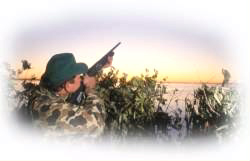
According to the National Rifle Association, more hunters die each year from water-related accidents than from gunshot wounds. 91% of sportsmen who died in boating accidents between 1995-2000 were not wearing a life jacket. Compared with the general boating fatality population, sportsmen were far more likely to have not worn a life jacket than all other boaters – a difference that might have saved their lives.
Yearly Fatalities of Boaters
1995-2000
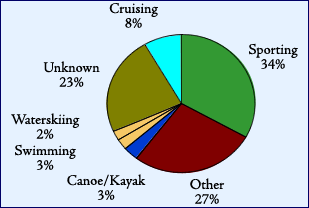
- 88% fatalities are from drowning.
- 40% of fatalities come from vessel capsizing.
- Cold water and strong current were reported in a high percentage of accidents.
- Most accidents happen in open motorboats 16 feet or less.
- Men ages 30-50 were the most common victims.
Special Issues
Most hunting and angling takes place on boats that are less than 16 feet long, the length of boat that has the dubious distinction of being involved in the lion’s share of boating fatalities. Boats under 16 feet often have flat bottoms or semi-v hulls and are known for their instability. It’s no surprise then that the primary causes of hunting and fishing accidents on the water are capsizing, falls overboard and flooding or swamping.
This isn’t to say hunters and anglers should stop using small boats. What it says is that they should take precautions in small boats, precautions like correctly loading the boat and using caution while moving about the boat and landing fish or fowl. Above all, a sportsman should wear his life jacket.
Loading the Boat
Correctly loading a small boat starts from your very first step onboard
- First of all, step gently into the center of boat; avoid stepping on the sides (called gunnels) or the seats, or jumping onboard.
- Secondly, if you have a lot of gear, hand the gear to someone on the boat, or leave it on the pier and reach for it from the boat. Boarding a boat with a handful of equipment gives you extra weight and instability, and leaves you without a hand to steady yourself.
- Also, it is important to hold on to something whenever boarding or moving around the boat, even if you feel you are stable. You never know when another boat’s wake, someone else in the boat losing their balance, or your dog’s sudden movement can cause a chain of events that might leave you in the water, or in the bottom of the boat with an injury.
When loading gear
- It is important to distribute the weight evenly around the boat, making sure not to overload. Take special care not to load too much in the back (stern), since once the boat picks up speed, the stern will go lower in the water and is prone to swamping.
- Additionally, it is important to keep the center of gravity low in the boat. Piling gear high can raise the center of gravity and can cause the boat to tip over unexpectedly. This same rule goes for the people in the boat, which is why you should avoid standing in small boats.
- Make sure your anchor and dock lines are properly stowed to avoid tripping.
- And as you are loading, be sure you have brought along a life jacket for each person aboard—it’s the law. Better yet, have everyone in your group put on the life jackets before even leaving the dock.
To avoid overloading the boat, check the vessel’s capacity plate
The capacity plate states the total amount of weight (including people, gear and motor) the boat is made to hold. If your boat does not have a capacity plate, the U.S. Coast Guard suggests the following basic guide.
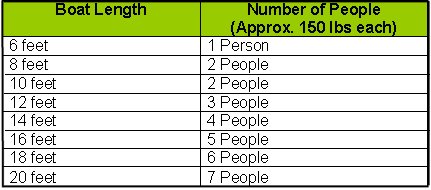
Be sure to take into consideration the weight of the gear you’ve brought along.
To put this into perspective, if you have an 18 foot boat, you can expect to be able to carry 900 pounds of motor, gear, and people. If the outboard weighs 200 pounds, the fuel and gear weigh another 200 pounds, you can realistically only take 2 other people with you on the boat–maybe just one if everyone weighs over 200 pounds or the weather is rough.
Moving About the Boat
Once in the boat, it’s a good idea for all passengers to avoid standing. Small boats can easily become unstable, and when people and/or dogs are sharing the space, the danger of capsizing increases.
- The first thing to remember is just common sense: keep your weight in the center of the boat. If you’re reeling in a fish, try to do it in a seated position and use a landing net to get the fish into the boat. Hunters can also use a landing net or boat hook to avoid leaning too far over the side of the boat to retrieve birds and decoys.
- Hunters should stay seated while shooting so they can brace themselves for the gun’s recoil. Standing up in an unstable boat will raise the center of gravity and only make the boat less predictable.
- When setting decoys, be careful not to lean too far over the sides of the boat.
- Anglers should stay in a seated position during casting so as not to lose their balance. A jonboat is a good example of a boat that is not made for standing.
- Bass boats are specially designed and weighted for standing, just be sure to keep your legs spread for stability, lean against a seat where possible, and wear a life jacket.
- Landing Fish or Fowl is one of the most critical moments in your boat is when you try to retrieve your fish or waterfowl. Your blood is pumping, your heart is racing, and everyone in the boat is leaning over to see what you’ve got. That’s the moment that the weight of the boat can change suddenly, and before you know it, you’re all wet.
Water Skiing & Diving
Water Skiing Safety
Water skiing is a great way to have fun while enjoying boating. That said, it’s not an activity to be undertaken without preparation. It requires some special skills by the boat operator and the skier, an understanding of hand signals, and demands a lot of attention to safety by both parties.
As the captain of the boat, it’s your responsibility to ensure the safety of your skier, so before hitting the water, take a couple of minutes to set down some rules with the skier and the other passengers in the boat. Review water skiing hand signals (see list below), plan where you’ll go once the skier is behind the boat, and discuss what is expected of everyone on board. Below are some guidelines that will help make your next water skiing trip safe and enjoyable.
Basic Rules of Waterskiing Safety and Courtesy
- Do wear a life jacket while operating the boat and while skiing. The skier should wear a U.S. Coast Guard approved life jacket that has a high impact rating and is designed for water skiing.
- Do have an observer on board whose only job is to watch the skier, receive signals and alert the boat operator if the skier falls.
- Do discuss ahead of time how you intend to pick up a downed skier and give instruction how to properly re-board.
- Don’t ever leave the boat running while a skier is attempting to re-board and never use the engine or propeller as a step.
- Do be familiar with the water skiing area so you can avoid areas of shallow water, submerged obstructions and other dangerous situations. Also, stay clear of beaches and swimming areas, and do not purposely spray other boats or swimmers.
- Do go over hand signals with the skier before he or she is in the water.
- Do use a tow rope that is at least 75 feet long.
- Do give a wide berth to fishermen and slower moving crafts like canoes, kayaks and sailboats.
- Don’t ski when it is getting dark or is night. It is hard for the boat operator, skiers and other boats to see.
- Don’t use drugs or alcohol while operating the boat or water skiing. The substances impair good judgment and coordination.
- Don’t ski within 300 feet of another vessel, or 100 feet of the shore, a dock, or swim area.
10 Steps to Water Skiing Success
- The water skier should enter the water and move away from the boat before the boat’s engine is started. When starting the engine, the boat operator should make sure no one in the water is near the propeller.
- Wait for the skier to signal that he or she is ready to go. You can use verbal or hand signals.
- Move the boat forward slowly until the ski line is taught. When the skier gives a thumb’s up (power up) signal, take off in a straight line with enough power to raise the skier out of the water. Once the skier is up, adjust your speed based on the skier’s signals.
- In areas where water skiing is common, a traffic pattern may already be established. Pay attention to what the other boaters are doing and don’t jeopardize your skier’s safety by pulling in front of other boats.
- The skier should never wrap any part of the tow line around his or her body. It’s also a good idea to take off all jewelry and secure life jacket straps that might become loose in the wind and whip at the skier.
- The skier should stay aware of surroundings and potential hazards. As soon as falling, the skier should look behind to assess if there is a danger of being run over. If the situation seems safe, he or she should give the OK sign to let the boat know there are no injuries.
- After falling, the skier should hold a ski up out of the water while waiting to be retrieved, and if necessary waves his or her arms.
- The boat should circle the skier slowly to either return the tow line or pick up the skier. In some states, the boat must fly a skier down flag while retrieving a skier.
- When approaching a skier, always keep the skier in view and on the operator’s side of the boat.
- Always shut off the engine before allowing the skier to board the boat. Once the skier is onboard, retrieve the towline.
Water Skiing Safety
It’s inevitable that some boats towing skiers will get closer to your boat than you might like. In areas where water skiing is common it’s necessary to keep a sharp eye out for skiers at all times.
- Give water skiers a wide berth. Try to stay at least 100 feet away from each side of a skier, as he or she may not know your boat is there.
- Do not approach a skier too close from the rear. If he or she falls you may not have time to stop or alter your course.
- Avoid driving your boat directly into the sun if it is making it difficult to see other boats and skiers. It may be necessary to zig-zag slightly to avoid the direct glare of the sun.
Ski Signals
Communication becomes vital when you’re the skier at the end of a 75 foot rope behind towed behind a motorboat! That’s why these hand signals for skiers are so important.
| Basic Signals | |
|---|---|
| Speed up the boat: Thumb up |  |
| Slow down the boat: Thumb down |  |
| Cut Motor/Stop (also used by driver or observer): Slashing motion over the neck | 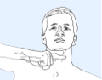 |
| Turn the boat (also used by driver): Circle motion with arms over-head then point in desired direction |  |
| Return to dock: Pat on the head |  |
| OK or signal understood: OK signal with hand |  |
| Skier OK after falling: Hands clasped over head |  |
Swimming & Snorkeling
Swimming & Diving Near Boats
There’s nothing like swimming from the back of your boat on a hot summer day. But swimming from your boat isn’t nearly as predicable as swimming in your pool. Boats may anchor in deep water and then, seconds later–a puff of wind or current– and the terrain beneath the boat is altogether different. There may be rocks lurking just below the surface, currents that can carry a swimmer away, or boats that come too close.
To make sure you and your crew stay safe while swimming from your boat, there are a few things you need to know
- Swimming from your boat can be great, but there’s a time and place for it. Never, ever swim in a marked channel, even if there are no boats around. You never know when a boat with limited maneuvering abilities will come along.
- Swimming in marinas should also be avoided. Marinas are made for boats to come and go; they are no place for swimmers. In addition to the risk being run over, boats that are plugged into AC shore power can sometimes leak electricity into the water, either from the boat or from the marina’s electrical systems, putting swimmers at considerable risk.
- Illegal dumping of holding tanks also occurs in some marinas, further making them unpleasant swimming holes.
- Don’t swim in areas where there are strong currents or undertow.
- Enter the water gradually, never dive. Under a boat, the terrain can be uneven, and landing on a rock or shallow spot is a real risk. Even if you’re going back to a familiar spot, droughts and currents can change bottom characteristics.
- Never leave the boat’s engine running while swimmers are in the water. Propellers can be deadly, and so can carbon monoxide (CO) fumes. Even a running generator can cause CO fumes to accumulate near the boat, which can be fatal to swimmers.
- When swimming from a boat, wear a life jacket for flotation or have flotation devices in the water for easy access by swimmers. Running a line off the back of your boat with a flotation ring or throwable float can also be useful.
- Make sure if you get off the boat, there’s an easy way to get back on. Not all boats are easy on, easy off.
Swim-proofing Your Swim Platform
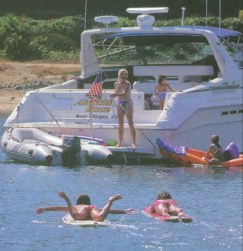
If you have a swim platform, take a look at the cleats or other hardware attached to it that could cause injury if a person slips and falls on it.
There are several things you can do to make swimming from a platform – molded or teak – safer.
First, you can improve the non-skid by using a nonskid tape, which is inexpensive and much safer than the molded-in patterns. You can consider moving the cleats (or having a professional do the job) so that they are out of harm’s way.
It might also be possible to install a pop-up cleat that folds out of the way when it’s not being used. As an alternative, you could improvise a cover using something like a sailboat spreader boot or old tennis balls – anything that might soften the edges of the cleat, should a swimmer fall.
Other Activities
Snorkeling is great fun, but it’s easy to get so engaged in looking below the surface that you forget to look above! Many of the above swimming rules apply to snorkeling, but with a little extra caution thrown it.
- Practice snorkeling in a pool first. Breathing through a tube may seem easy, but for some people it takes some practice. It’s easy to become flustered or fatigued when you are in the ocean and confused about your equipment.
- Snorkeling can be very distracting, so snorkelers must make an effort to look up every few moments to gauge their position and make sure they haven’t strayed too far from the boat, or into a channel.
- In popular snorkeling spots, there can be a lot of boats coming and going. Wear bright colors, or better yet a bright life jacket or snorkeling vest to make yourself more visible.
Scuba Diving is also a popular sport which requires significant skill and attention to safety. Two of the most essential pieces of equipment for divers, aside from their diving gear, are two identifying flags: the blue and white Alpha flag and red and white diver down flag.
Snorkeling & SCUBA Flags

The Alpha flag signifies restricted ability to maneuver and must be flown from the boat hosting divers or snorkelers. This is the only flag that is required by federal law to be flown by boats mothering diver or snorkelers, and a rigid replica of it no less than 1 meter (3.3 feet) high must visible to other boats. At night, red over white over red 360 degree lights must be displayed.

The second flag, called the Diver Down flag, is probably more recognizable to most boaters. This flag is flown from a float in the water where people are engaged in diving activities.
It is not required by federal law to be displayed, however some states do require it. This flag will help other boaters know there are divers beneath the water who could immerge at any time.
Other boats that see these flags displayed should give the area a wide berth. Laws vary from state to state on how much distance a boater must give an Alpha flag or diver down flag; in some states it could be 300 feet, in others 100 feet. While boating anywhere near a diver down flag, keep a lookout for bubbles breaking the surface which could indicate divers who have strayed away from their boat.
Personal Watercraft
Recent History
Personal Water Craft (PWC) have become a major force in boating, accounting for a significant portion of new boat sales annually. There are more than one MILLION PWCs in use today.
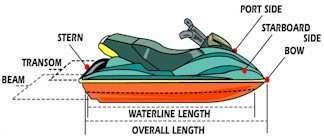
That is a huge number of boats, and unfortunately there is an equal amount of misunderstanding to go along with them. Did you know that a PWC was even considered a boat? Many people don’t, and think of them more as toys that require no training or knowledge of how they work. To start, think of the terms used for a boat – they will be the same for a PWC.
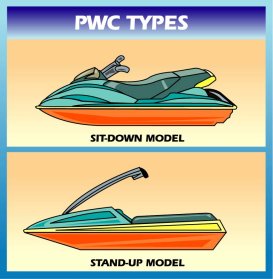
When PWCs first came on the market, they were generally designed for only one person and were designed for high maneuverability. They were usually only available as stand-up models, and had few features.
Over the last several years, two, three and even four seat models have become the top sellers. These craft are much more substantial than earlier craft, and are even capable of pulling a water skier. Today’s models generally come with a good deal of storage space for gear, and have a very traditional “dashboard” with gauges. Remember, your PWC operator’s manual will tell you the specifics of your boat, including tips on safe operation, and how many people you can safely carry.
What they are
Personal Water Craft are considered by the Coast Guard to be Class A inboard motor vessels and as such must adhere to the same Coast Guard regulations and standards as any other powerboats in this category, such as they must have a fire extinguisher on board, and must have an appropriate sound signaling device such as a horn or athletic whistle.
They are also subject to USCG manufacturing and load capacity standards, which may be found on the capacity plate and in the owners manual.
They must be registered with the state, and must also obey the Nautical Rules of the Road.
Even though PWCs are considered to be boats, there are a few differences that you need to know.
Virtually no PWCs have running lights as all manufacturers recommend that they only be used during daylight. In fact, many states ban the use of PWCs at night.
Many states require that Personal Floatation Devices be worn at all times while on a PWC. Many states also regulate the operation of personal watercraft within their borders by prohibiting them from specified lakes and boating areas, or by placing geographic or time restrictions on their use.
Some states require an adult to be on board when a minor is operating the craft, or may require completion of a boating safety course before a minor can legally operate a PWC.
How they work
PWCs are operated by two-cycle inboard gasoline engines that drive a jet water pump. Water is taken in through a water pick-up on the bottom of the PWC, drawn into an internal propeller (an impeller) that creates a jet of high pressure water which exits through a nozzle on the back of the PWC.
There is also a moveable “gate” that can be dropped over the nozzle to provide reverse thrust on some models. Be careful, this is not designed to be used to stop a PWC operating at a high speed.
PWCs are designed to be extremely maneuverable. They are built for quick, sharp turns, low-radius circling, and rapid acceleration. However, they are only maneuverable with the throttle engaged – TO MAINTAIN STEERAGE, YOU MUST APPLY THROTTLE! For instance, the best way to avoid hitting an object is NOT to slow down, rather, you should apply throttle and steer away to avoid impact.
PWCs are self-righting if you fall off. Don’t abandon your vessel if it overturns. Simply turn it over on the direction marked on the hull or as indicated in the user’s manual that you read prior to use. Righting your craft improperly may make it more difficult than necessary to re-board, and you could cause internal damage to your PWC. To re-board your craft, approach the rear of the PWC, pull yourself up into a kneeling position, take your seat, start it up and continue on your trip. This sounds easier than it is – it is often quite difficult to re-board a PWC, especially in rough water or when fatigued. A good idea is to practice in calm shallow water before venturing out.
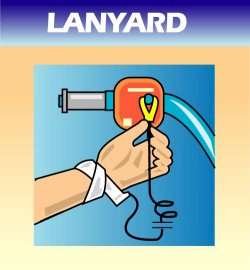
Most models have an automatic cut-off lanyard (which must be attached to the operator’s wrist or life jacket at all times) or self-circling feature to prevent a PWC from going far from a driver who has fallen off.
Practice boarding your PWC in a calm, shallow area with your friends or family. If you have difficulty getting back on a PWC from the water, you should most likely avoid using your PWC in areas where there is a strong current or high waves. There are “ladders” available to help you climb back on – definitely a worthwhile investment. Finally, don’t forget to re-attach your cut-off lanyard.
When operating a PWC, keep clear of shallow water (less than two feet deep) or beds of sea grass or other vegetation. Since a PWC sucks water in to power its water jet, it is best not to operate in these waters. This will help keep dirt and debris from fouling the impeller, which could lead to power loss or damage to your PWC.
Operational Requirements
Legal requirements
As Personal Water Craft are considered to be type “A” motor craft, they must adhere to certain Coast Guard requirements as follows.
- Your PWC must be equipped with a marine-rated fire extinguisher and emergency signaling devices.
- All PWCs must be registered according to state regulations, and have a registration number displayed. Follow state guidelines for specific regulations.
- You must adhere to the manufacturer’s listed capacity limits for people and equipment. Each PWC has an attached capacity plate that states what you may carry. Additional information may be found in your operating manual.
- Personal Floatation Devices must be worn by riders. Chose a properly fitting, Coast Guard approved PFD and WEAR IT.
- You may be required to take a boating education course prior to operating your PWC. Check your local laws.
Other gear you should consider
- Eye Protection – water spray can greatly affect your vision. Goggles or wrap around glasses offer the best protection.
- Foot Protection – Shoes or sandals will protect your feet and give you added traction.
- Gloves – Gloves will allow you to keep a tight grip on wet controls.
- Wet Suits – In colder water a wet suit will provide extra comfort by keeping you warm. Nettle suits will protect you from stinging nettles in the summer.
- Helmet – Many PWC accidents include head and neck injuries. Wearing a helmet and a high impact PFD with a neck brace will greatly reduce the effects of a high speed impact.
Pre-ride Inspection
It is always a great idea to check your watercraft prior to every outing. This will allow you to make sure that your watercraft is in top operating condition. Some things to check are:
- Battery – Make sure that your battery is fully charged, and all electrical wires are properly connected, tight, and not frayed.
- Controls – Make sure all operating controls are working properly – steering controls, stop button, lanyard cut-off, and throttle.
- Drain Plug – drain your bilge – and be sure your plug is properly secured before launching.
- Engine – Check your engine – fluid levels, hose connections, oil level/leaks, and finally make sure the engine compartment cover is properly secured.
- Fuel – Make sure that you don’t have fuel leaks, and fill the tank. Plan on using 1/3 of your gas to get there, 1/3 to get back, and keep 1/3 as a reserve. Many PWCs are equipped with a fuel selector or reserve switch to help you avoid running out of fuel. If you run out of fuel, switch the tank setting to “reserve” and go to the dock. Don’t forget to reset the switch once you’ve filled up again.
- Hull – Check the outside of your PWC–check for hull damage, check the jet pump cover and inlet for damage/fit, and secure the seats.
- Protection – A properly fitting life jacket, gloves, wetsuit, eye, head and foot gear, and a helmet will all help protect you from injury.
- Safety Gear – Make sure you have the required safety equipment – a fire extinguisher, signaling device(s) and all other legally required equipment. It’s also a good idea to have an anchor, extra line, a boarding ladder, drinking water, and suntan lotion.
PWCs and the Environment
Pollution
- Refuel on land to reduce any chances of spilling oil or gas into the water.
- Slow down when filling the tank, don’t over-fill, catch any accidental spills with an absorbent pad, and dispose of it properly.
- Check and clean your engine well away from shorelines. Water and oil don’t mix and can harm the water’s delicate micro-organisms as well as the animals who feed on them, potentially upsetting the entire food chain.
Turbidity
- In shallow waters, boats may stir up the bottom, suspending sediments which limit light penetration and depleting oxygen. This can affect fish and bird feeding. To avoid this effect, ride in main channels, and limit riding in shallow water.
- When it is necessary to ride in shallow water, keep watercraft at an idle speed. In coastal areas be aware of low tide. The waters may be substantially more shallow at these times revealing sea grass beds and other delicate vegetation.
Vegetation
Even though PWCs don’t have an exposed propeller, you must take caution if you operate near shore. Vegetation such as sea grasses are delicate nursery grounds where many of the fish in our waters originate. Weeds, grasses and other plant life are not good for your PWC. Ingestion of these into your craft may cause engine or pump problems, and reduce performance. Stay Away.
When possible, operate well away from shore because, typically, wildlife inhabit the vegetation along the shore’s edge. The least amount of disturbance is in the marked channels or the deeper areas of a lake or river. If at all possible, stay in main channels.
Excessive boat wakes may contribute to shoreline erosion, especially in narrow streams and inlets. Erosion is a concern for all shorelines including rivers, lakes, and oceans.
The slow destruction of shorelines affects the habitats of plants and animals. Near the shore avoid high speeds which create wakes and observe posted no wake zones.
Noise
Be aware that the noise and movements of boats may disturb bird populations. Steer clear of posted bird nesting areas.
Many migratory birds are easily stressed and especially vulnerable during their migration period. Birds will typically fly away from disturbing noises and any unnecessary expenditure of energy can harm a feeding or resting bird. Bird rookeries are especially vulnerable to noise from boats, including personal watercraft. Nesting birds may fly from the nest exposing unprotected eggs and hatchlings to the sun’s heat or predators.
Wildlife Harassment
Do not harass wildlife by chasing or interrupting feeding, nesting, or resting. Harassment is defined as any action that may cause an animal to deviate from its normal behavior. It is illegal and can unduly stress wildlife. Mammals such as sea otters, sea lions, manatees and whales can be injured from direct impact by boats traveling at high speeds. Ride at controlled speeds so you can see any animals ahead of you. Avoid area of high animal population. If you hit an animal report it to your local wildlife commission. There may be a chance to save its life.
Docking & Beaching
One of the great features of having a jet drive is the ability to easily beach your PWC.
When docking or beaching, look for evidence of turtles, birds, alligators, manatees, and other animals along shore. Avoid docking or beaching where plants such as reeds, grasses and mangroves are located.
These plants are essential to the ecosystem because they control erosion and provide a nursery ground for small animals vital to the food chain, such as crustaceans, mollusks, and small fish.
Endangered Species

Many species of plants and animals are threatened with extinction due to habitat loss. The Endangered Species Act of 1973 was created to protect these animals. It is illegal to trade, kill, hunt, collect, harass, harm, pursue, shoot, trap, wound or capture species designated as endangered, or in danger of extinction, such as threatened, rare, and species of concern. The U.S. Fish and Wildlife Service is responsible for listing the hundreds of species in decline.
Be aware of the endangered or threatened species found in your riding area that are protected by a “safe haven”. These protect them from human development, and create an environment where they are allowed to survive and flourish.
Here are just a few endangered animals you might encounter while riding: brown pelican, manatee, southern sea otter, wood, stork, American alligator and whales.
Special Habitats
- Mangroves are a distinctive type of tree that have adapted to living in or near saltwater. There are four types of Mangrove trees, two of which are threatened with extinction. Many shore birds such as pelicans and roseate spoonbills nest in mangrove forests and islands. Mangroves shelter other marine life, control erosion and filter runoff. They also build up the shoreline and serve as a buffer that protects the land from storms and winds.
- Don’t operate in un-marked mangrove channels, you’re disturbing mangroves, birds, and other animals who reside in this area.
- Coral is a living organism which provides a safe haven for hundreds of marine creatures. This firm, yet fragile species is vulnerable to the effects of human intrusion. If you are riding near coral, do not use an anchor, and be careful when diving to avoid coming in contact with these delicate organisms.
Marine Plant Life
- Kelp forests support a lush underwater community teeming with fish, invertebrates, sea urchins and sea otters. Found close to shore, the kelp canopy covers the surface of the water and extends down, sometimes thousands of feet, to the bottom of the ocean floor. In warm months, this seaweed can grow as much as a foot a day.
- Sea grasses are nursery grounds normally found in protected waters called estuaries where fresh water and salt water meet. Most of the world’s fish have their beginnings in estuaries and their associated sea grass habitat. Sea grasses are very delicate and their destruction can lead to degradation to the entire marine cycle.
- As a responsible PWC operator, stay away from both of these environmentally sensitive areas.
Preventing Accidents
Be aware of what is around you. The leading cause of PWC accidents is striking an object (usually another PWC). If you are operating your PWC in a congested area, slow down and look at what the boats around you are doing. To avoid being struck yourself, always look for other boats before making sharp or sudden turns.
Because PWCs are so small and maneuverable it is best to always give the other boats the right of way. Larger boats may not see you, and may not be able to get out of your way in time to avoid contact. Keeping a proper lookout can save your life.
As with any boat, operate at a safe speed. It is very easy to get thrown from a PWC, especially if you hit wakes or turn too quickly. Operating at a safe speed for the conditions will lower the risk of an accident.
If you lend your PWC to a friend, make sure they know the Rules of the Road and how to operate your PWC. A large portion of PWC accidents occur with rental PWCs or when people other than the owner are operating the vessel.
PWC Etiquette
With the rapid rise in the number of personal water craft, there have been many complaints about their use and misuse. Many people would love to see them outlawed altogether, and there are currently many local jurisdictions that are attempting just that.
With common sense and common courtesy, both PWC users and traditional boaters can coexist and enjoy their time on the water. Following some simple operating procedures can help eliminate the majority of complaints against PWCs.
Noise is probably the number one complaint about PWC use. Though manufacturers are continually developing quieter motor and exhaust systems (PWC motors all operate within legal limits for noise) there are many complaints about noise.
The best way to avoid noise complaints is to follow the Rules of the Road and also to avoid operating at high speed near the shoreline and other boaters. Riding through surf and boat wakes is not only dangerous, but in many states it is illegal to do either.
Don’t operate close to wildlife or aquatic vegetation. Even though PWCs probably have less of an impact on nature than many traditional boats, it is prudent to avoid boating in areas that could be harmful to the environment. Avoiding vegetation and debris will also spare your delicate propulsion machinery from unnecessary damage.
Obey the law! If all PWC users faithfully obeyed the law, there would be far fewer complaints, and consequently far fewer usage restrictions. PWC operators control their own destiny regarding new restrictions.
The PWC industry itself is a leader in responsible use of their products. The Personal Watercraft Industry Association has created a code of ethics for PWC users that really is valuable for all boaters.
PWC Code of Ethics
- I will respect the rights of all users of the recreational waterways, both on public waters and on adjacent private property.
- I will be considerate at the launch ramps and docks. I will get on and off the ramps quickly and not delay others. I will follow the navigation rules of the road around all other vessels. I will learn and observe my state’s rules on wake jumping.
- I will give all fishing, anchored, or drifting vessels plenty of room.
- I will always operate at headway speed in “no wake” zones.
- When approaching the shore, I will be especially aware of swimmers and other craft near the shore.
- I will not disturb wildlife. I will avoid areas posted for the protection of wildlife.
- I will not litter the shore side and I will be careful with my fuel.
- I realize that my travel speed should be determined by my equipment, ability, weather and wave conditions, and especially other vessel traffic. In case of emergency, I will volunteer assistance.
- I will not interfere with or harass others. I realize that people judge all personal watercraft by my actions.
- I will pay close attention to the noise my vessel may make and be aware of how others on boats and on shore react to that noise.
You Can Make A Difference
We all have a duty to the next generation to protect our bountiful natural resources. Take a moment to learn what the environmental concerns are in your riding area.
If you’re interested in observing wildlife while riding, keep an idle speed to reduce wake, noise and turbidity (stirring up the bottom). Know your riding area for the safety of the environment, for your own protection, and for your personal watercraft’s protection.
Paddlesports
The Freedom of Paddling
The joys of paddlesports are many. Paddling can be a hobby, an exercise activity, or a simple method from getting from one place to another. Paddlecraft come in various shapes, sizes and types. Canoes, kayaks and river rafts are the most common. Other craft such as shells, prams and other rowing devices are also gaining in popularity. Best of all, paddling provides opportunities for all skill levels from the novice to the expert, including those with disabilities.
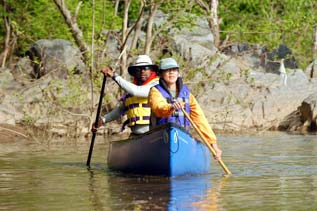
As a paddler, you are largely responsible for your own safety. Always wear your personal flotation device (PFD) while afloat – a PFD is your single best piece of safety equipment. Also, learn basic rescue techniques so that you can help yourself and others in the event of a capsize or other emergency. And, remember that you may find yourself sharing the waters with other, often larger boats which may have difficulties spotting the smaller harder to see paddling enthusiast.
Some Statistics
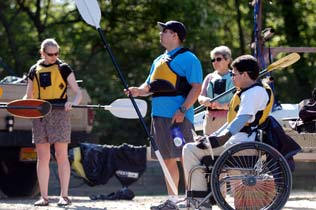
Participation in paddle sports is one of the fastest growing recreational activities in the United States with kayaking ranking as number one. With this growth, unfortunately, the number of on water accident have gone up. Sadly, most serious injuries and deaths that occur while paddling could have been prevented.
Participants must realize that paddlecraft tend to be more tippy, when compared to other water craft and thus, should minimize occupant movement to prevent capsize or falling overboard. Because canoes and kayaks are narrow, they are less stable than larger boats, so it is important to keep weight low and in the center of the craft.
Preventing an Accidental Capsizing
- Maintain at least 3 points of contact with your boat when moving around
- Load the boat properly and never exceed the boat’s capacity rating
- Keep your shoulders inside the gunwales (sides) of the boat
- Avoid poor weather, rough water and the wake of other boaters
Paddlers are also closer to the water, which makes them more susceptible to cold water temperatures in the event of a spill, so cold water deaths, especially in northern regions, are more common with paddlers. And finally, surveys indicate paddlers tend not to consider themselves boaters, and often pay little attention to learning and observing traditional boating safety rules.
Accidents Don’t Just Happen
Statistics show that over 80% of the paddlers who died in the United States were not wearing a PFD. However, 98% of paddlers report that they own one. When examining all known accident cases, including capsizes/falls overboard, it was reported that 90% of the victims go in the water unexpectedly and had no time to grab a PFD. Simply put, wearing a PFD save lives.
Hazardous water or weather conditions were cited as the primary cause in more than 40% of paddlesport accidents, pointing to the importance of consulting weather information and scouting the area first. Surprisingly, operator inexperience accounts for only one in four paddling fatalities, suggesting that the more experienced paddler often becomes complacent with safety procedures or takes unnecessary risks.
Be Safety Conscious and Know Your Limits
Tragically, as many of 25% of reported paddler deaths were alcohol related. Save the alcohol for when you are back ashore safely. In a paddlecraft, you need good balance and a clear head. If you are an experienced paddler, think about these statistics and lead by example. Unfortunately, the statistics have one thing in common – they’re all things that a smart paddler can plan for and, in most cases, avoid.
Be Safety Conscious and Know Your Limits
Participating in paddlesports offers something for everyone. Choosing your craft wisely, planning your outing and preparing for the inevitable will provide for maximum enjoyment whether you are participating for exercise, excitement, or a relaxation. As you go paddling, there are a number of things you need to take into consideration. The following will help you to have a safe and enjoyable time on the water.
- Take a Lesson & Get Started
- Learn Safety & Rescue Procedures
- Wear Proper Gear & Protection
- Know the Rules & Regulations
- Practice Good Environmental Ethics
- Advanced Technique
Be Safety Conscious and Know Your Limits
Taking a Class – Taking a class is a great way to get an introduction to the sport. A class will not only teach you the basics of boat handling, safety, and technique, it will also expose you to some of the widely available types of paddlecraft. Contact the American Canoe Association by calling (800) 929-5162 for a class near you.
Selecting a Boat – Paddlecraft come in all sorts of shapes and sizes – some can be paddled solo, while others are meant for tandem paddlers. Shape and size determines speed, comfort, stability, maneuverability and overall safety. Ideally, the safest boat is one that remains afloat, even when fully swamped.
Know Rules and Regs – In some states, you must register you paddlecraft and some states require that you have certain equipment aboard. Regulations can vary so check with your state boating organization. Also, since you are not the only type of water craft out there, it is important that you know basic navigation rules and can recognize aids to navigation, especially white and red informational or regulatory markers that indicate known dangers.
Be Prepared – Always be informed about the weather and the body of water in which you are boating. Be prepared to deal with weather changes, other boat traffic, low light conditions, minor medical emergencies and always have a way to contact help.
Help Yourself – Before heading out, know your own limits, practice self rescue techniques, and always travel with a group – never travel alone. However, a good rule is to assume that no one else will be there to help. Always wear your PFD.
Have Fun – When learning, always start close to shore, boat in shallow water and learn and go with a group. Never boat alone and expect to get wet. It’s inevitable that you’ll capsize at some point in your learning career – plus, its part of the fun. If you are prepared for that dunking, it won’t startle you as much.
Safety & Rescue Procedures
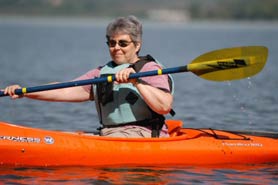
Paddling is fun, especially when it is safe. Like any outdoor activity, if you follow a few common sense rules, learn the basics of having a safe time, and are prepared physically and mentally, you’ll be able to handle the variety of experiences that paddling and the great outdoors will throw at you.
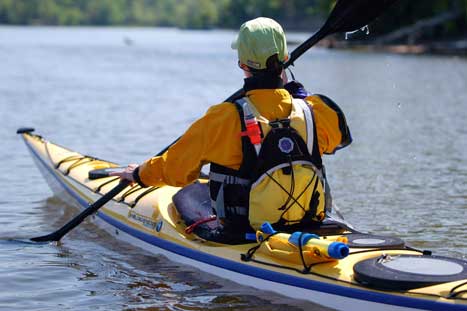
Wearing a properly fitting life jacket just makes good sense. Gone are the days of bulky life jackets. Today’s jackets are made to fit without impeding the typical movements of a paddler. They come in a variety of styles for both men and women. Many come with gussets, breathing vents and additional pockets for maximum comfort and utility. Check out the latest Type III and Type V PFD’s below.
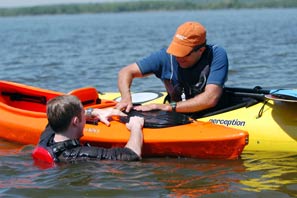
If you are wearing your PFD, you will always know where it is. Wearing a PFD makes self rescue and assisting others easier. Basic self rescue involves righting your craft, emptying it of water, and reentering. This is easiest done when close to shore. Self rescue in deep water involves more advanced skills.
If paddling alone, which we never recommend, ask yourself if you could swim the rapids (if in white water) or, can you swim ashore while towing your boat (if near coastal). This is important if you find yourself in a situation where you are unable to get assistance or self rescue.
Go paddling in groups! It is more fun and definitely safer. Always position your strongest paddlers at the front (lead) and one at the back (sweep). Use river signals if you are not within ear shot to notify others of potential hazards. Do not take risks and avoid unnecessary hazards.
Safe Paddling Practices
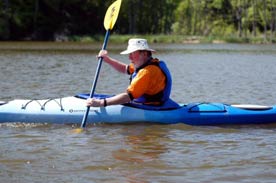
- Always wear a properly fitting PFD (lifejacket) while afloat
- Do not stand up in a canoe or kayak – keep your weight low
- Be able to handle your boat – know how to propel, steer and stop
- Dress appropriate for weather conditions – pack spare dry clothes
- Carry a supply of water and food adequate for your trip length
- Never overload the boat with more weight than it was designed
- Never boat while under the influence of alcohol or drugs
- Avoid weather and water conditions beyond your skill level
- Never approach a low-head dam, fallen tree or other obstruction
- Do not paddle alone and always inform others of your trip
- Learn about your route in advance, especially potential hazards
- Learn how to self rescue and the skills necessary to assist others
Hazards to Avoid
Fast Moving Water and High Water – Moving water has literally tons of pressure behind it. Water levels and conditions can change rapidly, especially downstream of a dam. Getting trapped in moving water or pinned to an obstruction can be deadly.
Low-Head Dams and Waterfalls – From upstream, dams look innocent enough, but don’t underestimate the power of its suction or current.
Low-head dams are especially deceiving, and in fact can be virtually invisible until you are too close to reroute.
Below dams and waterfalls, undertows and back currents (called hydraulics) can pull a paddler and his craft underwater, and sometimes pin them below the water’s surface indefinitely.
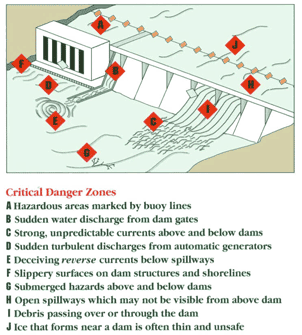
Water Obstructions and Strainers – Avoid overhanging branches or downed trees, especially in moving water. These obstacles permit water to pass through while retaining solid objects. In moving water, these obstructions can trap boats or paddlers who have fallen overboard.
Limited Visibility – Don’t count on your eyes to spot dangers at night. And in fog, don’t expect other craft to see you, especially larger fast moving boats. When approaching a blind bend in fast moving water, get out and check it out. When in doubt, scout.
Cold Water – Be especially prepared for cold water. When the air temperature and water temperature add up to 120 degrees Fahrenheit or less, wear a wet suit or a dry suit. Always carry a spare change of dry clothes in a watertight bag when boating in cold water. Falls overboard in cold water (or even exposure to cold air for a period of time) can lead to a deadly consequence called hypothermia. The most typical symptoms of hypothermia in general order of onset that you must assess and treat.
- Shivering
- Impaired judgment
- Clumsiness
- Loss of dexterity
- Slurred speech
- Inward behavior
- Shivering stops
- Muscle rigidity
- Unconsciousness
- Death
Proper Gear & Protection
Many of the annual paddling fatalities and serious injuries in the U.S. involve paddlers who are ill equipped for the conditions. Standard equipment for every participant is a properly fitting life jacket (Personal Flotation Device or PFD). Some states have made this law for persons under a certain age.
Proper clothing, including adequate foot wear, should be worn while paddling. Proper clothing will help regulate body temperature, protect you from exposure to the elements, and add an extra layer to help prevent blisters, abrasion and sunburn. As an outdoor enthusiast, you may own much of this equipment, so don’t be scared off by the huge laundry list.
However, the most important and basic rule of paddling is to wear a life jacket.
Essential Clothing & Equipment
- PFD – Properly Fitting Flotation Device
- Sun hat or helmet for whitewater
- Sunglasses with U.V. eye protection
- Sunscreen (apply frequently when wet)
- Footwear with good traction
- Dry bag with change of clothes
- Bailer, sponge or bilge pump
- Drinking water in plastic bottles or thermos
- Temperature appropriate clothing in layers
- Synthetic clothes that dry rapidly
- Dry/Wetsuit if air and water temperatures combined total less than 120 degrees
- Whistle, river knife, light, first aid kit
- Throw rope and tow line
- Map or chart and compass
Other Safety Equipment
- Spare PFD and spare paddle
- Energy bars or candy
- Signal mirror and waterproof matches
- Duct tape, small repair kit
- VHS Radio and GPS locator
Rules and Regulations
PFD Requirement – U.S. Coast Guard regulations require that canoes and kayaks of any length have a properly fitting PFD (Type I, II, III or V in flotation rating) for each person on board. In order for the Type V to qualify as required safety equipment, it must be worn. However, we strongly encourage every paddling participant to wear their PFD, at all times, regardless of type. Some states do require an additional Type IV throwable device. However, it does NOT replace the requirement for another Type PFD to meet the minimum federal carriage requirement. Regardless, it is always a good idea to have a throwable device onboard.
Registration Requirement – Only a handful of states require paddlecraft be registered with the state agency. The following states require an official registration and/or validation stickers be affixed to the craft: AK, IL, OH, OK, IA, MN and PA. Some states require that the owner’s name and address be permanently affixed to the craft in a noticeable location. These requirements allow state agencies to identify owners in the case of abandonment, separation, or theft.
Auxiliary Power – If you affix a mechanical motor for propulsion of any type, your craft becomes a “motor boat” and vessel registration is mandatory in all 50 states. You must also comply with all legal requirements designated by the Coast Guard for craft of your length. You must also abide by additional state and local regulations that pertain to motorboats, including speed limits, navigation rules and mandatory safety equipment.
Restricted Areas – All paddlers must be mindful of federally mandated exclusion and security zones and keep a safe distance of 100 yards from all Navy vessels. On local lakes and rivers, you may encounter restricted areas around bridge abutments, large dams and some shore based facilities like power plants. Of course, obey all No Trespassing signs and warnings that rivers, lakes and other bodies of water are closed.
Rules of the Road & Ship Traffic – If paddling in areas of motorboat traffic or near shipping channels, know what the buoy markers mean, especially in busy harbors where established “lanes of travel” exist. Consult with charts or use or monitor channels 13 and 16 for communication. Remember, large boats have blind spots, can’t maneuver as well, and take a long time to stop. When possible, pass astern of larger craft and wear bright noticeable colors – don’t count on them seeing you.
Environmental Ethics
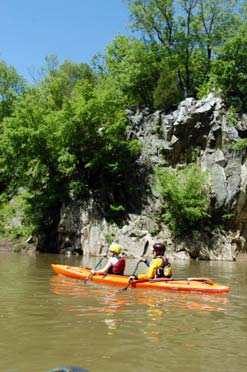
By observing the following standards of conduct, paddlers reduce the opportunity for conflicts that may result in reduced waterway access and burdensome regulations.
- Always pack out trash
- Recycle used fishing line
- Build fires in designated locations only
- Obey all rules and regulations
- Respect private property
- Be mindful of human waste disposal
- Use only public land and access
- Be considerate to other boaters
- Give fisherman a wide berth
- Observe wildlife at a distance
- Never change clothes in public
- Respect local culture
- Give back to the waterway
Other Safety Equipment
Safe paddling techniques and advanced rescue skills are acquired through practice. To learn properly, please consult a certified instructor or certified dealer. A life may depend on it.
Towing a Person – In flat water, you may be able to assist another person to shore by having them grab a loop or handle at the stern and tow them in. Or, you can “bulldoze” them by having them hold to the bow with their legs wrapped around the hull.
Paddle float – This device is an inflatable bag that attaches to one end of a paddle so that when the other end of the paddle is held or affixed to the boat, it provides an effective outrigger making the craft more stable and easier to enter.
Sponsons – Are cylindrical inflatable bags that can be attached to either side of a canoe or kayak to improve buoyancy and stability for re-entry.
Sling – A sling can be fashioned out of rope or webbing and can be a helpful “step” for re-boarding. Make a loop and attach it to a secure point on the boat, or loop the other end around the blade of the paddle that is help firmly in place by another person or by lashing it fast.
Swamped Boats – When a canoe or kayak fills with water, it is extremely heavy and very difficult to maneuver. Swamped boats tend to roll and bailing is often ineffective. For a swamped canoe, it is best to get the boat to shore or shallow water and emptying it. For kayaks, it is possible to drag the kayak over the deck of a fellow boater and allowing it drain. A hand operated bilge pump may assist. Whatever you do, stay with your craft, especially if you are unsure of your ability to make it ashore.
River Running – When attempting to run a river that is moving quickly, be sure you get instruction in river reading and know how to handle the river’s currents. Also, use the American Whitewater River Signal system to communicate with other members in your party when traveling in moving water and stay together as best as possible.
Moving Water Capsizes – When capsized in moving water, first check for your partner and swim to the upstream end of the craft. To avoid being pinned, do not position yourself between the boat and a rock. Leave your craft only when it will improve your personal safety. To lesson your chance of injury in fast water, position yourself on your back and point your feet downstream and at the surface of the water if you become separated from your craft. Be cautious exiting the water – do not attempt to stand in moving water above knee level. The possibility of foot entrapment is great, even in relatively slow moving water.
Throw Rope Bag – is a rescue device that can be thrown quickly to a swimmer or used to unpin a canoe. It can be easily stored and should be ready for quick use and should have at least 50’ of 3/8” brightly colored poly propylene rope (it floats).
To use a throw bag, first make sure your footing is secure. Open the bag to let the rope to freely run out, and then grasp the bag in your throwing hand. Hold the free end in your other hand and shout, “ROPE!” to the swimmer. Then throw the bag either underhand or overhand. Aim to cross the swimmer with the rope. Brace yourself for significant force when the rope becomes taut.
These skills (and more) should be learned in a class setting, taught by knowledgeable, experienced, certified instructors. Paddlers would be well served to seek out such classes and instructors and learn these skills. Your life may depend on it.
Much of the information in this section has been provided the American Canoe Association (ACA), a nationwide, not for profit organization that is in service to the broader paddling public. It is the oldest waterway-based conservation organization in the world and is dedicated to preserving the nation’s waterways, and to grow the sport of paddling by providing education on matters related to paddling, supporting stewardship of the paddling environment, and enabling programs and events to support paddlesport recreation. To learn more and join the ACA, or to take a paddlesports class, visit www.acanet.org or call (800) 929-5162.
Inland Boating
For many boaters, exploring different cruising grounds means towing a boat to a new lake or river. Many times, both sides of the shore are visible, and navigation consists of locating a familiar landmark.
Sounds easy, right? Think again, as inland cruising has many different rules for operating your boat, and many hazards that you might not be aware of without the “local” knowledge of the water. So how do you get that information?
Before you go out on any body of water, you should try and get a chart. This will give you a good idea of areas to stay away from. More accurate information should be obtained by looking at local boating or fishing guides, the USCG “Notice to Mariners”, and most importantly, you should talk with local boaters. Talking with people at the bait shop, the launch ramp, or the marina will help you find out the information that you won’t get on a chart – how the current is running after the rains, how low the water is because of the drought, etc.
In the following text we will discuss common waters that people boat on, and common hazards that are found on those waterways.
Rivers and Lakes
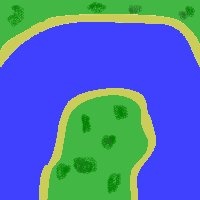
With thousands and thousands of miles of navigable rivers, the United States offers a tremendous variety of cruising options. Rivers offer many different challenges to boaters, and you need to know what to expect before you start off on your next river adventure.
Hazards that occur on rivers vary greatly depending on where you are cruising. For instance, rivers off the Chesapeake Bay may include such things as shallow waters and soft, muddy bottoms that make running aground very likely, especially if you don’t pay attention to the tide. Rivers in Maine may offer great tidal changes and submerged rocks that will do extensive damage to your boat if you happen to strike one.
Other things to watch out for are low-head dams, bridges with restricted clearances, over-head power lines, and even buoys that are submerged or moved by a fast moving current. Natural hazards include bars and shoals, submerged rocks, floating debris (which may accumulate into partial dams called “strainers”) and strong tides and currents.
River bends must be handled with great care, as you often cannot see what is around the bend.
Though most boaters tend to operate their vessels in the middle of the waterway, the waters are actually deeper on the outside of river bends.
It is prudent to stay as near to the outside of the channel as you can in order to keep in the deeper water, and you will also be able to see oncoming traffic earlier – especially commercial traffic.
Rules of the Road state that vessels following the current have right of way over vessels going against the current on the Western River System. But you would be foolish to claim this right if you have right of way over a barge or other commercial traffic that must maintain constant speed and steerage to stay in the channel.
When in doubt, or when you are faced with a much larger commercial vessel, give way! Stay in contact with river traffic, and if you are approaching a commercial tow, consult with the captain to see on which side he wants you to pass, or if he wants you to wait for him to clear the bend before you pass. Remember, it is much easier for you to maneuver than it is for a commercial vessel.
Using maps or following aids to navigation on lakes and rivers can be confusing at best, and very dangerous if you are not familiar with the system being used on that particular body of water.
Different agencies such as local map companies, the U.S. Corps of Engineers and NOAA, use different symbols to show the same object. Similarly, symbols may take on completely different meanings on different charts. Pay attention to the map legend to note what different symbols stand for.
Dams
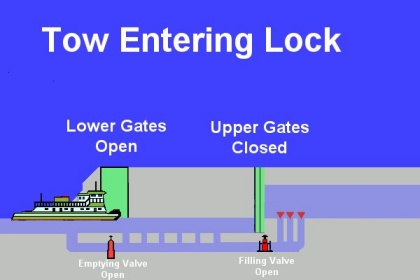
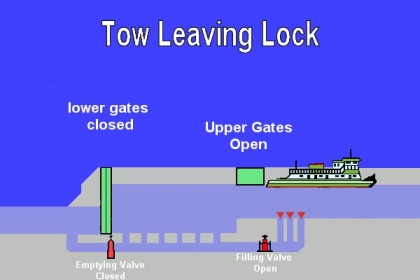
Dams also offer unique enticements and challenges to boaters. Most reservoirs and many rivers have large cruising areas that have been created by dams. Dam spillways often hold trophy-sized fish in their turbulent waters. But the dangers are real.
Low-head dams in particular hold many dangers, and while they may be fairly safe at low water, they can become death traps when water levels rise. As water tumbles over the edge of the dam, it creates a turbulent current, sometimes called a “backwash” or “boil” or “hydraulic” that can be impossible to escape should you fall into one. These hydraulics can be strong enough to even pull your boat under.
- Dam spillways, either from a large dams’ sluice, or from a low-head dam, create an undertow that can swamp your boat and pin you underwater. Many spillways are marked with buoy lines that mark the danger area- pay attention to them.
- From upstream, low-head dams may not be visible, so check your chart, and pay attention to any buoys or markers that may be in the water.
- Above the dam, you have hydroelectric intake tubes, water gates that can have large amounts of debris trapped in front of them, and low-head dams that can be difficult to see until you are on top of them.
The best course of action when cruising a new area is to check your map or chart for dams, especially low-head dams, and steer clear!
Locks
Over the last one hundred years much of America’s interior has been opened to cruising boats because of canal and lock systems such as the Tenn -Tom waterway and the New York State Barge Canal. While these canal systems were formed for commercial traffic, recreational boaters now heavily use them.
Canal systems can have virtually every type of waterway that you can boat on, from narrow rivers, to wide lakes. Here are some things you need to consider on waterways with locks.
- Make note of the water levels on the canal system you will cruise. Water levels may vary dramatically over the course of a year. If your boat has a deep draft, you may not be able to travel on some canal systems during certain times of the year.
- Be careful of floating debris in lock systems. Because water level and flow is regulated, debris tends to build up, especially near the locks. Debris in the locks may get caught between your vessel and the lock wall, causing damage to your boat.
- Watch the currents as you head up river near a dam. Currents can be very strong, especially when the lock or dam gates are open.
As you approach a lock, there are special rules of the road you need to follow to insure a safe and quick lock transit.
- When you near a lock, hail the lock-master or tender on VHF channel 16/14/13 (Your local chart will have the proper channel marked) for instructions on when you can lock through.
- The lock-master will give you information on where to tie up, especially if you will be locking with other vessels. If you do not have a VHF, you may use three long blasts with your horn, or use small boat signal cord which many locks have on the outer approach wall of the lock.
- When it is time to enter the lock, you will either hear horn blasts, or see a flashing green light.
- A flashing red light means do not move forward, a green and amber light means proceed with caution, and an amber light means proceed under full control.
- Some systems may use fixed lights, but most use a flashing light system.) If there is a main and an auxiliary lock, one long horn blast will mean that you are to enter the main lock (land side lock) two long horn blasts mean that you are to enter the auxiliary lock (river side lock).
- The same signals are used to depart the lock, except that the horn signals are short blasts instead of long blasts.
There is a strictly enforced order that vessels may enter a lock. As a pleasure craft, you will always have the lowest priority for entering a lock.
Military craft have first priority, followed by commercial passenger vessels, commercial tows, commercial fishing vessels, and finally pleasure craft. Even if you are the first to arrive, vessels with higher priority will be allowed into the lock before you.
Normally everyone on board except the captain (if the captain is not also a line handler) will be required to wear a life jacket. Have bumpers on the side of the boat next to the wall, both sides if you are tied to a raft of boats. Automobile tires are not allowed in locks, so don’t use them for fenders.
Have your crew equipped with poles to fend the boat off the walls or other boats. Turbulence, other boats and the wind can move your boat around quite a bit inside the lock. Have strong lines to tie up your boat. Many modern locks have floating bollards to tie your vessel to, but most older locks do not. Make sure your lines are long enough to reach the top of the lock.
Never use a hitch to tie up with that you cannot readily remove from a bollard as you might need to remove your lines very quickly. Better yet, have a line handler take in or pay out slack as necessary. When it is time to leave the lock, you will do so in the order that you entered the lock. Proceed at a slow speed, and enjoy your trip.